The Top 10 AI Medical Billing Software Solutions in 2026

In 2025, the global AI medical coding market was valued at $3.41 billion, and it’s estimated to reach $10.84 billion by 2034. This growth indicates that the healthcare industry is shifting toward the adoption of AI tools. And, coding isn’t the only area where this technology is being used. Every day, software providers are unveiling AI capabilities for everything from patient communication to scribing—including medical billing.
If you want to expand your medical practice or healthcare organization’s medical billing with AI-driven capabilities, this is the guide for you. Here, we’ll cover:
- 10 AI Medical Billing Software Solutions to Invest In
- FAQs About AI-Powered Medical Billing Software
A truly unified AI-powered billing platform.
Experience PracticeSuite’s responsibly integrated AI features by scheduling a meeting with our team.

10 AI Medical Billing Software Solutions to Invest In*
Organizations that implement AI-powered medical billing solutions typically see an average 15–25% improvement in first-pass claims acceptance rates, and a 20–30% reduction in accounts receivable days, leading to a boost in revenue. Start your search for AI medical billing software with the list of top providers below!
| Software Provider | Best For |
| PracticeSuite | All-in-one billing platform |
| Waystar | Enterprise-level clearinghouse |
| athenahealth | Network-driven AI insights |
| Tebra | Integrated patient experience and growth |
| CureMD | Predictive claim scrubbing |
| DrChrono | Mobile and iPad-based workflows |
| NextGen Healthcare | Large ambulatory practices |
| Claimocity | AI-powered charge capture |
| ModMed | Specialty-centric documentation |
| Athelas | Full-suite AI automation |
1. PracticeSuite — Best All-in-One AI Billing Platform
G2 Rating: 4.3/5
Capterra Rating: 4.0/5
PracticeSuite delivers a truly unified, comprehensive medical practice management and billing platform that embeds intelligent automation directly into its core workflow. AI is integrated responsibly into its medical office software, pairing automation with human judgment to streamline medical workflows and enable healthcare organizations to practice profitably.
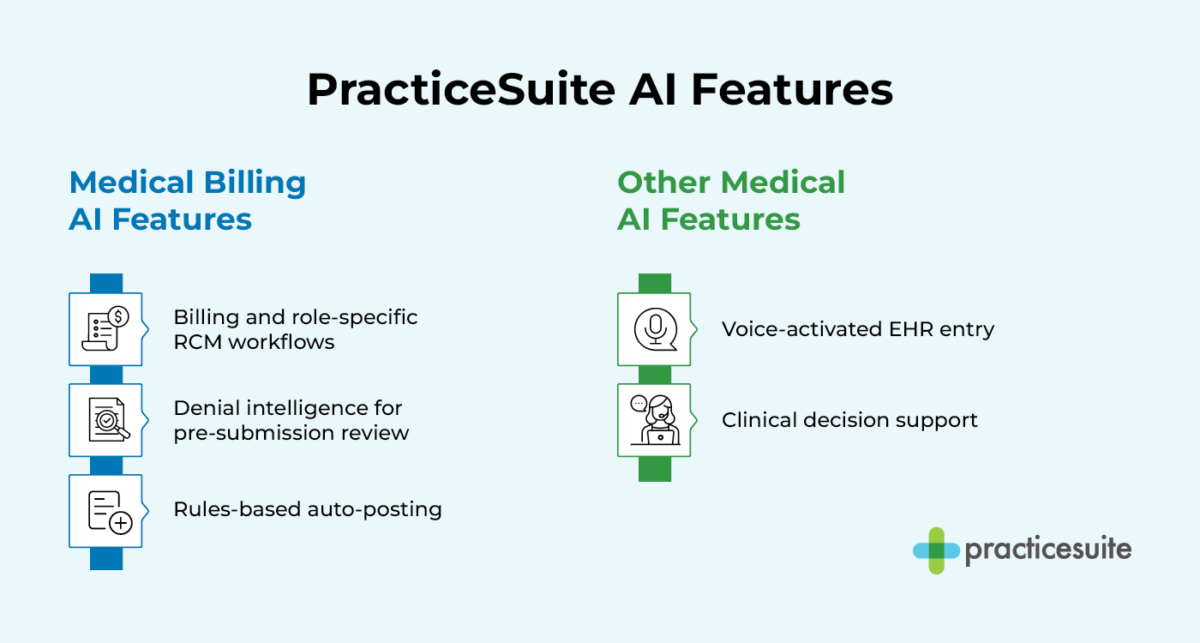
Key AI medical billing features:
- Billing and role-specific RCM workflow: Leverage PracticeSuite’s AI tools to customize billing and revenue cycle management (RCM) workflows to user roles, ensuring each team member only interacts with billing and financial tasks relevant to their responsibilities.
- Denial intelligence for pre-submission review: Identify potential issues with your claims before you submit them with PracticeSuite’s AI-driven medical billing features. Our advanced denial tools will analyze your claims and help you determine what changes to make to avoid denials.
- Rules-based auto-posting and adaptive post-adjudication machine: Automate payment posting based on pre-defined rules, reducing manual entry from your staff. This saves your staff members time on administrative tasks and saves revenue by avoiding mistakes.
Other PracticeSuite AI features:
- Voice-activated electronic health record (EHR)entry: Make visit documentation easier with advanced voice recognition, allowing providers to input patient data quickly and efficiently. This reduces manual entry time and accelerates the notetaking process.
- Clinical decision support (CDS): Close care gaps with rules-based, real-time CDS. This feature integrates evidence-based alerts and protocols, helping providers follow best care practices.
Other main PracticeSuite capabilities:
Pros:
- Seamless, comprehensive platform for medical practices and healthcare organizations
- Highly agile and cost-effective
- Dedicated, responsive, 24/7 customer support
- Proven legacy reliability with 20+ years in operation
- Customizable features that work for various medical specialties
Cons:
- May have more features than a small practice requires
- Requires initial rule customization to maximize automated workflows
2. Waystar — Best Enterprise-Level Clearinghouse
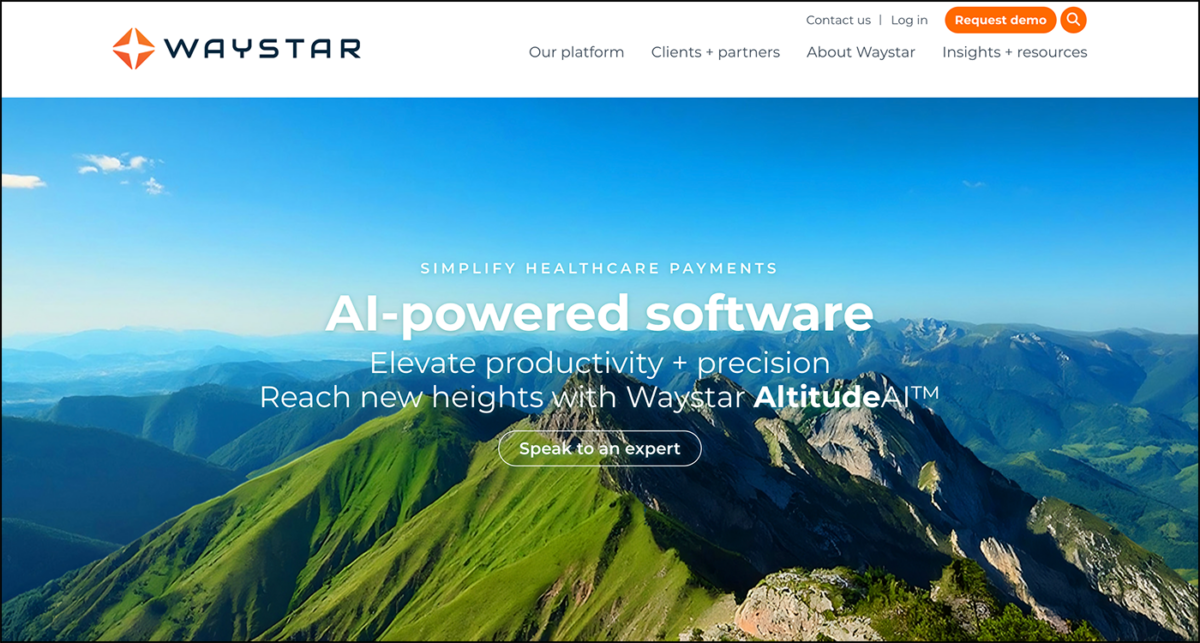
Waystar strives to help providers see their complete revenue cycle with more clarity, guiding them down a path for greater financial growth. Their platform leverages the power of agentic AI, generative AI, and advanced automation to increase client revenue.
Key features:
- Financial clearinghouse
- Patient financial care
- Clinical integrity and revenue capture
Pros:
- Deep, data-backed AI models
- “Agentic” AI automation
- End-to-end financial system
Cons:
- Enterprise-level complexity
- Implementation heavy
- Inconsistent customer support
3. athenahealth — Best for Network-Driven AI Insights
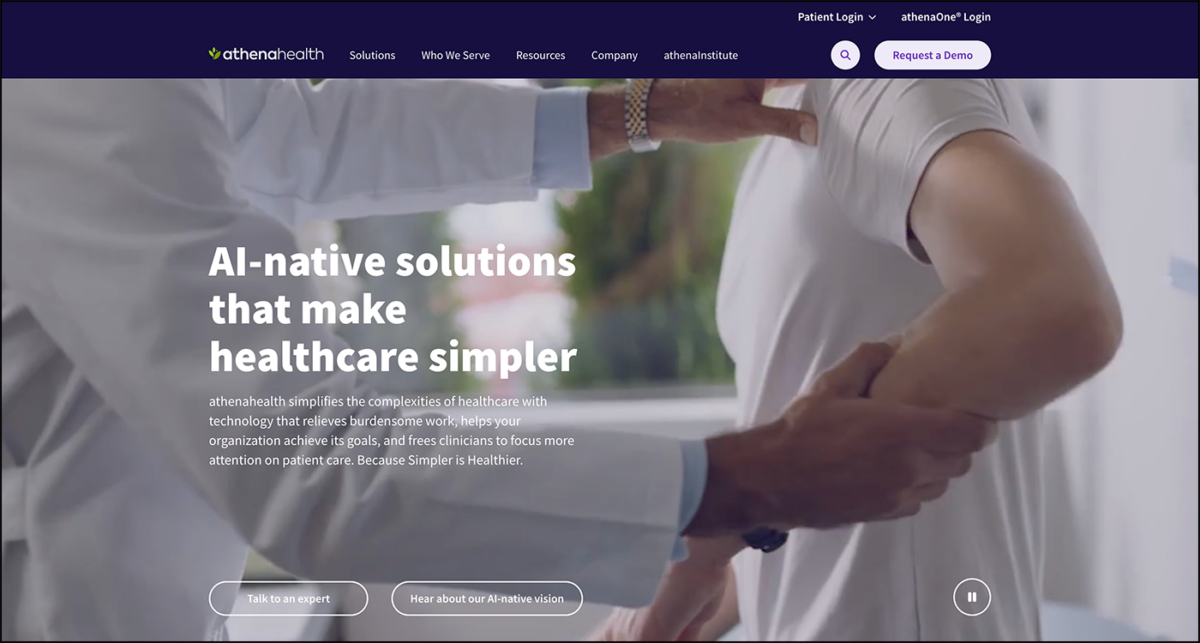
athenahealth aims to simplify complex healthcare tasks to help medical practices achieve their goals, and its AI capabilities are among its latest offerings to help you do so. Their AI-powered solution is built to deliver innovation directly to your existing billing, practice management, and EHR workflows.
Key features:
- AI search and summarize for national and local clinical data
- Ambient listening for automated clinical note generation
- AI-powered medical coding
Pros:
- Real-time, network-wide intelligence
- Cloud-native with automatic updates
- Intuitive user experience
Cons:
- Limited customization for specialty practices
- Cumbersome for smaller practices
- Varying support response times
4. Tebra — Best for Integrated Patient Experience and Growth
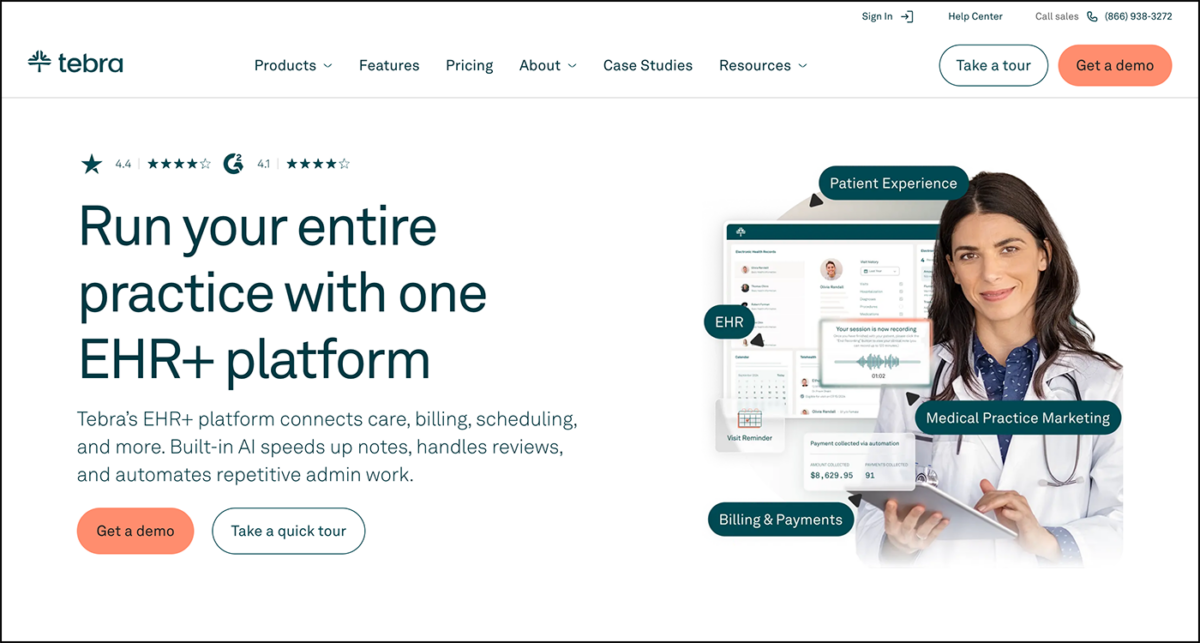
Tebra provides a medical platform that helps independent practices attract patients and streamline their financial workflows. Although the focus of their solution is EHR, their AI and automation tools are engineered to bridge the gap between front-office patient engagement and back-office RCM.
Key features:
- AI Smart Staff, including AI Note Assist, AI Review Replies, and AI Review Insights
- Robotic process automation
- Integrated patient collections
Pros:
- Unified EHR and billing platform
- Accelerated cash flow
- Intuitive initial setup
Cons:
- Expensive pricing
- Limited reporting features
- Slow issue resolution times
5. CureMD — Best for Predictive Claim Scrubbing
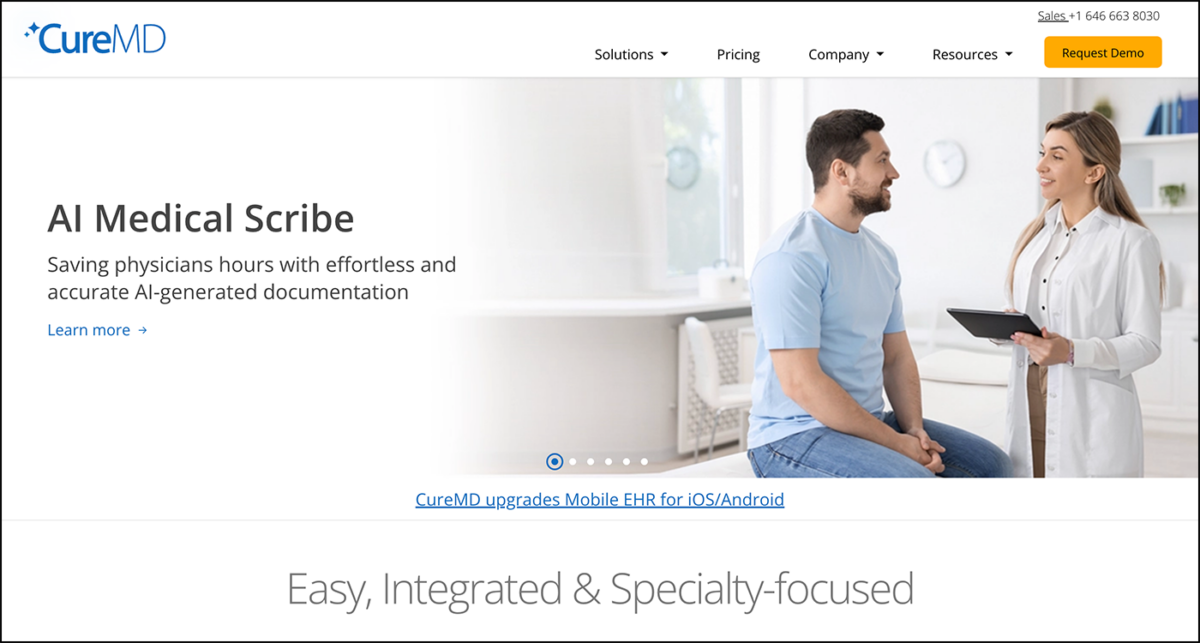
CureMD delivers a cloud-based practice management and EHR platform that includes AI medical billing features. By leveraging AI-driven predictive claim scrubbing and automated coding assistance, their billing solution identifies errors and missing information before submission, reducing denial rates and accelerating the revenue cycle.
Key features:
- AI-powered predictive claim scrubbing
- Real-time denial management
- Predictive analytics for revenue optimization
Pros:
- Comprehensive cloud platform
- Lower claim denials
- Reduced administrative burden
Cons:
- Steep initial learning curve
- Dated user interface
- Lengthy data migration process
6. DrChrono — Best for Mobile and iPad-Based Workflows
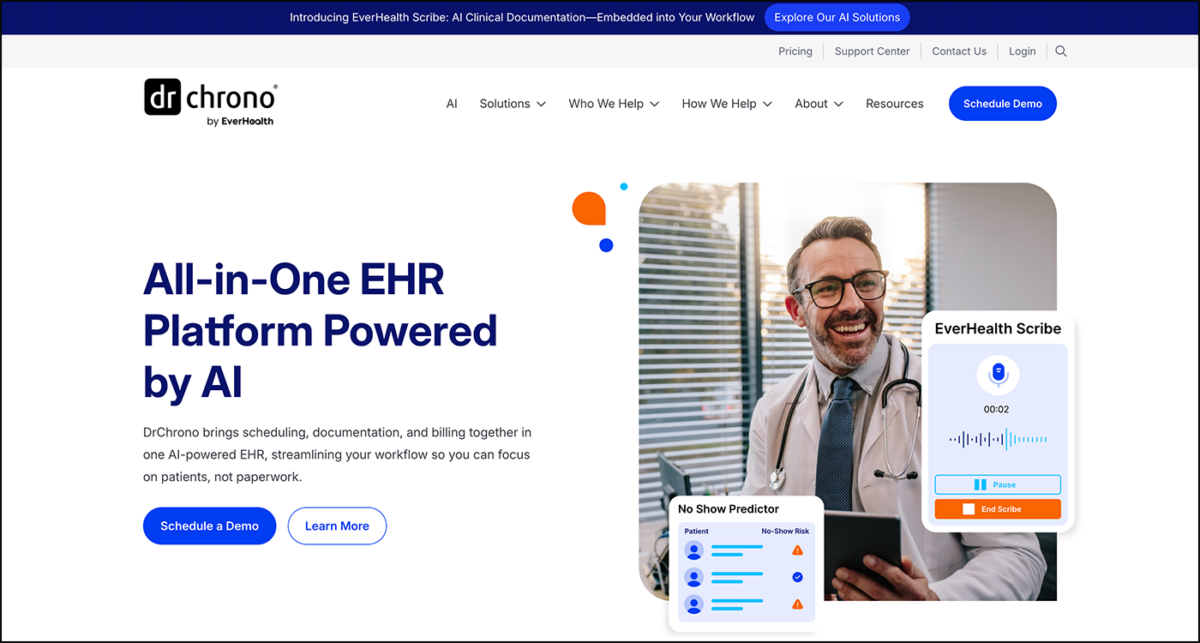
DrChrono’s AI features focus heavily on front-end tasks such as clinical documentation and no-show prediction. However, its integrated medical billing module connects with these workflows, allowing providers to capture charges and manage claims seamlessly from mobile devices or iPads.
Key features:
- AI-assisted clinical documentation
- Mobile-first EHR and billing
- AI-powered coding and claim checks
Pros:
- Seamless iPad and iPhone integration
- Highly customizable clinical templates
- Reduces charting time
Cons:
- Lacks deep back-office features
- Reporting tools are occasionally rigid
- Support resolution can be slow
7. NextGen Healthcare — Best for Large Ambulatory Practices
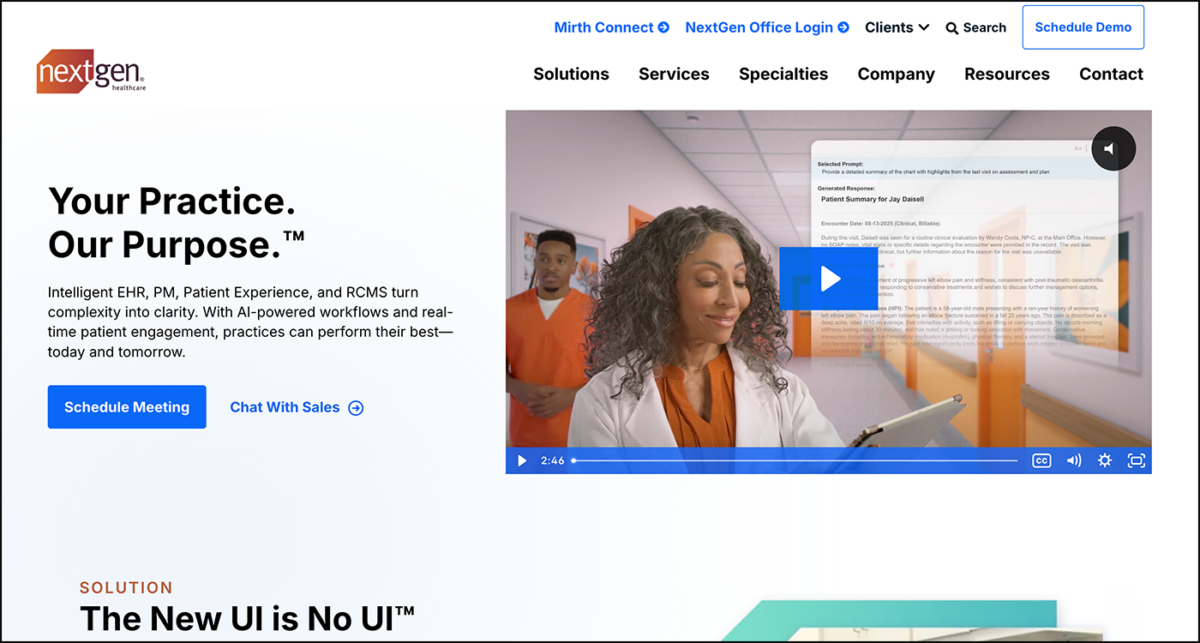
NextGen Healthcare offers a comprehensive, large-scale ambulatory software suite built to handle complex, multi-provider network workflows. To ease the heavy administrative burden of enterprise systems, it leverages ambient AI listening for hands-free documentation and traditional rules-based automation for back-end claim generation.
Key features:
- Ambient AI clinical documentation
- Enterprise-scale practice management
- Automated charge creation and routing
Pros:
- Established, trustworthy solution
- Highly scalable for massive networks
- Robust clinical interoperability
Cons:
- Heavy-footprint software that can feel bloated
- Lengthy and complex implementation timelines
- Lacks agility for smaller independent practices
8. Claimocity — Best for AI-Powered Charge Capture
Claimocity is a medical billing solution focused on simplifying inpatient and hospitalist workflows. Its AI-driven software includes a charge-capture engine that automatically identifies missed billable opportunities and optimizes coding, ensuring providers don’t let revenue slip through the cracks.
Key features:
- Real-time clinical note audits
- Mobile hospitalist rounding tools
- Automated billing code optimization
Pros:
- Easy to catch missed charges
- Optimized for hospital settings
- Intuitive interface
Cons:
- Functions as a billing add-on rather than a full practice management tool
- Less suited for standard outpatient/ambulatory clinics
- Requires integration with an EHR tool
9. ModMed — Best for Specialty-Centric Documentation
ModMed delivers a niche, specialty-confined EHR system tailored specifically for fields like dermatology, ophthalmology, and orthopedics. Its built-in AI medical billing features power its adaptive charting capabilities, learning a provider’s specific habits to automatically suggest relevant billing codes based directly on their clinical documentation.
Key features:
- Specialty-specific AI coding suggestions
- AI-enhanced faxing organization
- Claims denial assessments
Pros:
- Tailored to specific medical specialties
- Intuitive, clinical interface
- Streamlines the charting-to-coding transition
Cons:
- Billing software can feel secondary to clinical tools
- Restrictive if expanding outside of core specialties
- Can be costly for growing medical practices
10. Athelas — Best for Full-Suite AI Automation
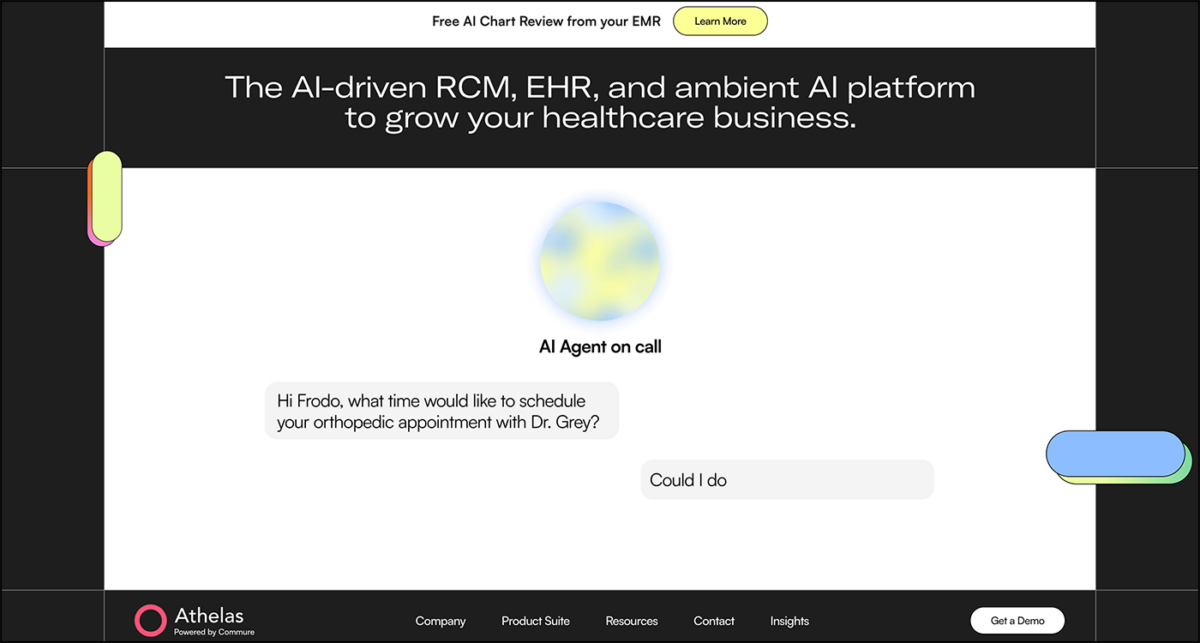
Athelas is a medical billing platform that uses three products to power its capabilities, including Ambient AI. Its features streamline workflows throughout the patient lifecycle, from before they visit to after they leave.
Key features:
- AI-driven patient intake and summaries
- Ambient voice scribing
- Automated coding suggestions
Pros:
- Cutting-edge clinical documentation tools
- Automates repetitive patient outreach
- Strong ambient listening technology
Cons:
- Complex onboarding and data migration process
- A newer, unproven solution compared to legacy systems
- Inconsistent or slow customer service
FAQs About AI-Powered Medical Billing Software
Is AI HIPAA-compliant?
Yes, AI can be HIPAA-compliant, but only if it’s specifically built and configured to process Protected Health Information (PHI) securely. When considering which AI-powered medical billing software best fits your needs, be sure it is HIPAA-compliant, and ask the provider’s team during your demo how their solution handles PHI.
How can AI assist with medical billing?
AI can assist with medical billing through automated medical coding, customized billing workflows, real-time eligibility and benefit verification, predictive claim scrubbing, automated denial routing and appeals, and fraud detection. Here’s a breakdown of each of these features:
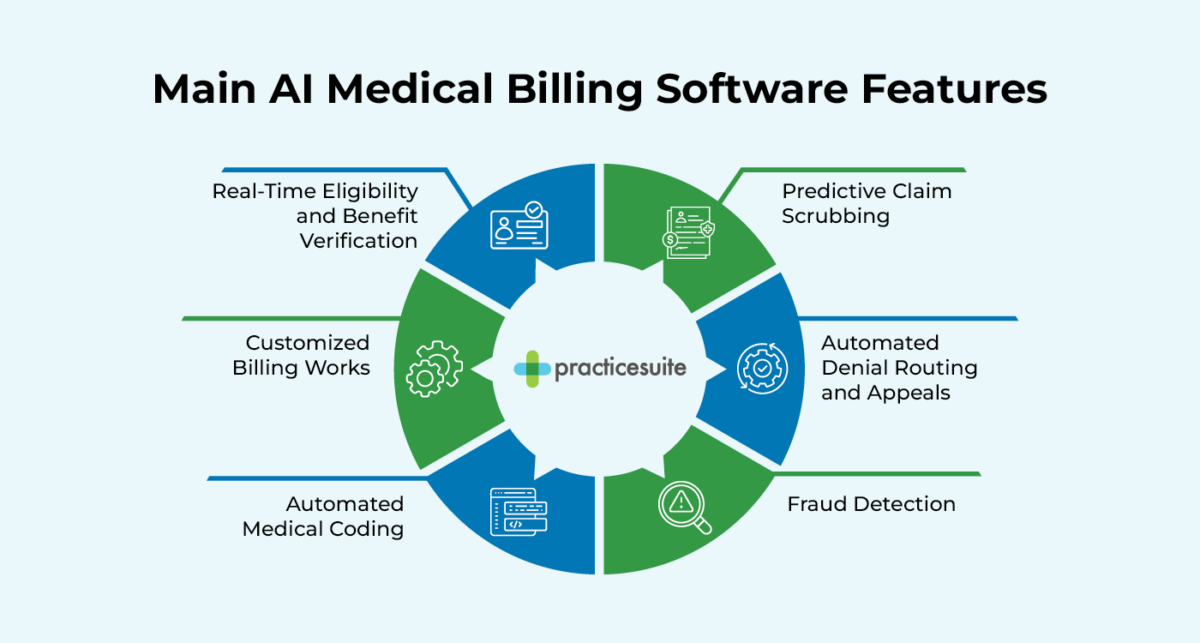
- Automated medical coding: Your AI tool will process clinical documentation like doctors’ notes or surgical transcripts and automatically assign the correct billing codes.
- Customized billing workflows: Customize workflows based on user roles to ensure each team only interacts with tasks relevant to their responsibilities.
- Real-time eligibility and benefit verification: Upon appointment scheduling, verifies a patient’s active coverage, identifies prior authorization requirements, and calculates exact copays or deductibles owed for full patient financial transparency.
- Predictive claim scrubbing: Analyzes claims prior to submission to identify potential issues early, such as missing modifiers or mismatched codes, and reduces denials.
- Automated denial routing and appeals: An AI-powered medical billing tool should be able to read the electronic remittance advice (ERA) when a claim is denied. Then, it will categorize the specific reason for denial and either auto-generate and submit an appeal letter or route the denial to the correct specialized human biller.
- Fraud detection: Your AI medical billing software will scan outbound claims to flag unusual billing patterns, ensuring your practice stays compliant with healthcare regulations.
What are the benefits of AI-driven medical billing?
AI medical billing software helps medical practices maximize reimbursements, reduce errors, increase staff efficiency, accelerate cash flow, improve financial understanding, and protect against audits. Here’s how these benefits impact your medical practice:
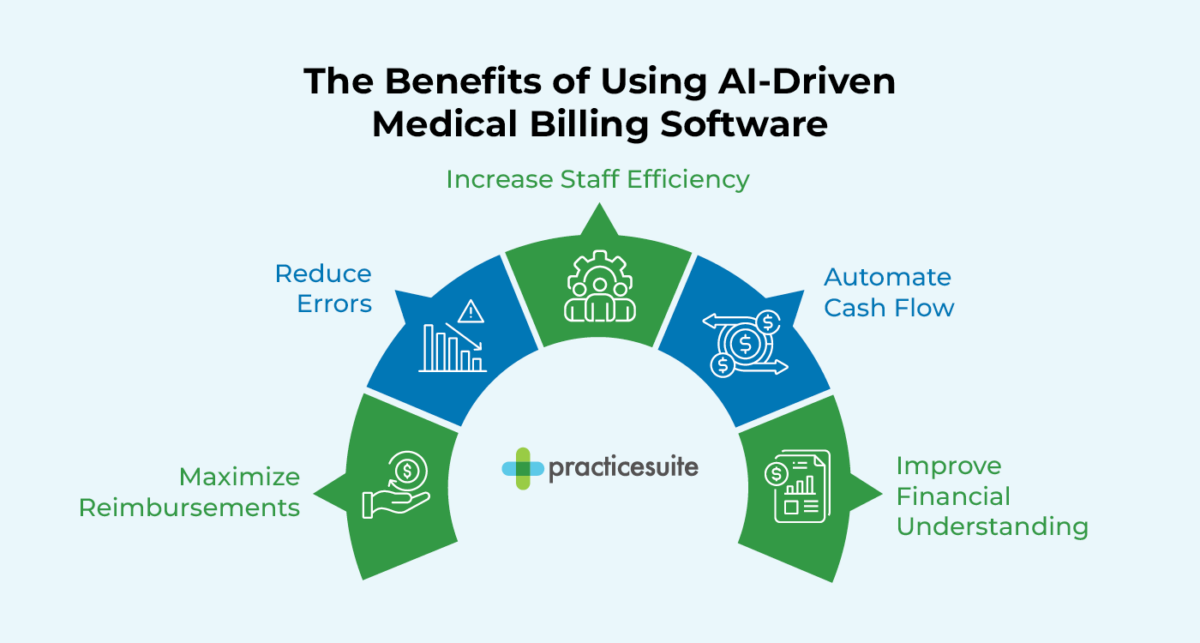
- Maximize reimbursements: Human coders and doctors may miss billable items hidden in clinical notes or even “under-code” to avoid audits. AI tools will ensure you get paid for all the work performed, immediately increasing your practice’s overall revenue.
- Reduce errors: With AI-powered features like automated coding and predictive claim scrubbing, your medical practice will reduce errors in claims and payment processing, which means less time spent correcting your mistakes.
- Increase staff efficiency: AI medical billing software streamlines workflows, reducing staff time spent on billing tasks. This frees them up to handle other important tasks that keep your medical practice running, allowing you to scale up without hiring more staff.
- Accelerate cash flow: Fewer mistakes mean fewer denials and faster reimbursements. Faster cash flow means you can more easily cover operational costs, shield yourself against industry changes, lower your cost to collect, and fuel your practice’s growth.
- Improve financial understanding: Medical billing-focused AI also analyzes financial trends, including cash flow forecasting, denial prediction, and identification of seasonal revenue risks. With these insights, your medical practice can make more informed decisions to improve its financial health.
Additional resources
AI-powered medical billing software brings many benefits to medical practices, but only if you approach the purchasing process thoughtfully. Use this guide as a jumping-off point to steer your search and determine which solution best fits your medical practice’s needs.
For more information about medical software, check out the following articles:
- 11 Top Medical Practice Management Software Tools. Explore our list of top practice management platforms that make running your medical practice easier.
- The Best Medical Billing Software for Small Practices. Smaller medical practices often struggle to justify the cost of a dedicated medical billing solution. Discover the best medical billing providers for small practices.
- Top 7 Revenue Cycle Management (RCM) Companies. Medical billing is a single piece in the revenue cycle. Learn more about RCM and companies that can assist your medical practice with its financial health.
Practice smarter with PracticeSuite AI.
We integrate AI across the entire patient-to-pay workflow for true practice efficiency.

*The information published on this page is based on independent market research conducted on April 22, 2026. The content presented is intended to be objective, accurate, and reflective of the information available at the time of publication. PracticeSuite makes no representations or warranties regarding the accuracy or completeness of the information presented, which is provided for informational purposes only.
If you identify any inaccuracies, updates, or changes to the information provided, please contact us so we can review and update the content as appropriate.