A Complete Guide to Medical Practice Management: 6 FAQs
Today’s practice managers wear an astounding number of hats, with responsibilities ranging from financial management to business operations to human resources to data and IT security. As it encompasses all these tasks, medical practice management can quickly become very complicated.
It’s normal to have questions about practice management, and that’s what we’re here to address. This guide will address top medical practice management FAQs, including:
- What is Medical Practice Management?
- What Does a Medical Practice Manager Do?
- What are the Typical Qualifications for Practice Managers?
- What are the Most Important Medical Practice Management Skills?
- What is Practice Management Software?
- How Can Practice Management Software Help?
By the end of this guide, you’ll be well-versed in the type of management activities a medical practice cannot succeed without. With an informed practice manager, your physicians can focus entirely on treating patients, knowing everything else is being handled.
Medical practice management made easy.
Automate and simplify all your responsibilities with PracticeSuite’s complete solution.

What is Medical Practice Management?
To put it simply, medical practice management refers to everything that happens in a medical office other than clinical work. Generally, their responsibilities fall into three categories:
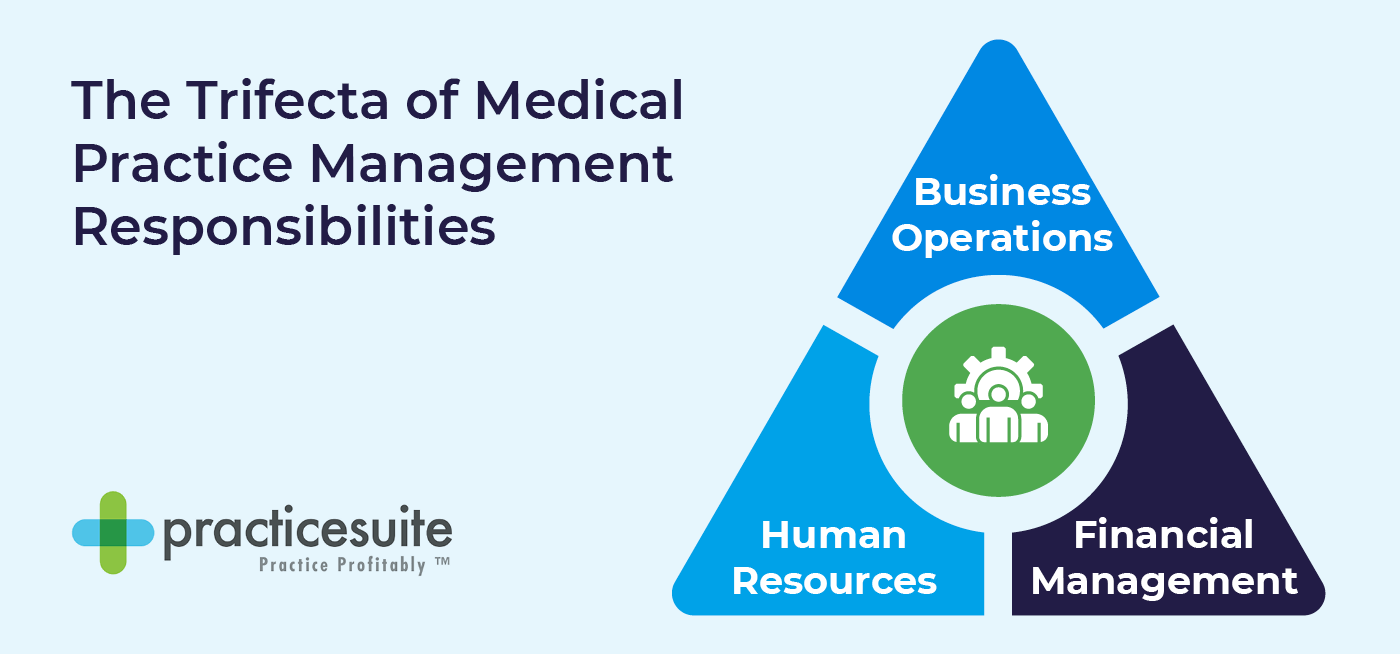
- Business operations. This refers to all the behind-the-scenes work that must occur for a medical practice to run successfully, such as appointment booking and insurance verification.
- Financial management. This includes all finance and revenue-related tasks that a medical practice must handle to ensure that its physicians are paid for their work.
- Human resources. This refers to all staffing-related activities, including hiring, training, and scheduling.
Medical practice management is usually handled by a practice manager. These individuals are familiar with necessary management activities, including hiring and training, cash flow management, patient satisfaction, and compliance.
Note that there is a difference between practice managers and medical office managers. The latter are generally more focused on the day-to-day operations of a medical practice, usually running the office. The former focuses on big-picture responsibilities. It’s possible for one individual to fulfill both roles, but for larger organizations, it may make more sense for these responsibilities to be split between multiple individuals.
What Does a Medical Practice Manager Do?
As their name suggests, practice managers handle all aspects of medical practice management. Their tasks can be divided into two types: front-office and back-office.
Medical Practice Management Tasks
What are the Typical Qualifications for Practice Managers?
Typically, practice managers need a combination of higher education degrees and professional certifications. Most candidates have a bachelor’s degree or higher in health information or health management. They may also have taken courses in human resources, accounting, electronic record keeping, ethics and medical terminology, and more.
In terms of certifications, practice managers may obtain one or more of the following:
- Certified Physician Practice Manager (CPPM), issued by the American Academy of Professional Coders (AAPC)
- Certified Medical Manager, issued by the Professional Association of Health Care Office Management (PAHCOM)
- Certified Medical Practice Executive, issued by the American College of Medical Practice Executives (ACMPE)
Additionally, many medical practices prefer practice manager candidates to have prior experience with the healthcare industry. The experience doesn’t need to be specifically in a practice manager role—individuals who’ve previously been medical coders or medical practice receptionists may be able to find work in medical practice management.
What are the Most Important Medical Practice Management Skills?
To handle all the tasks necessary for running a successful medical practice, practice managers usually need the following skills:
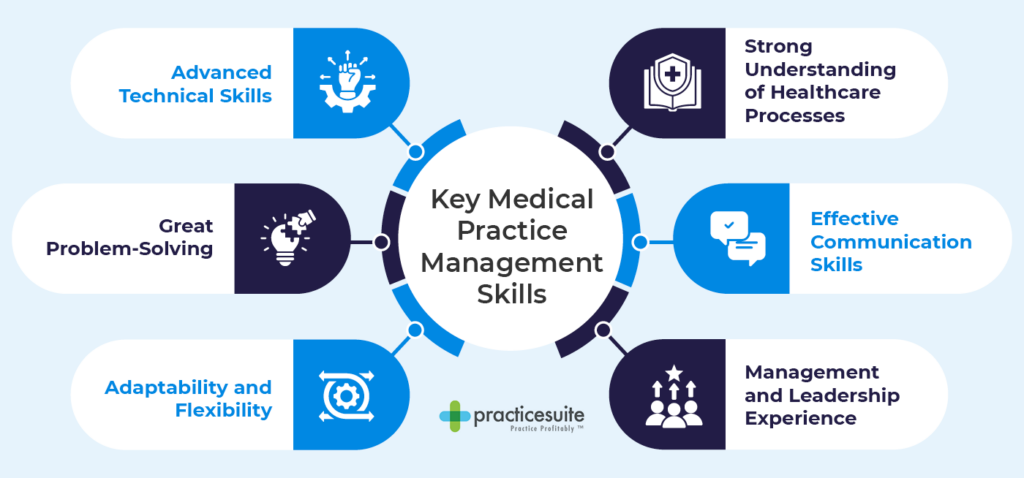
- Strong understanding of healthcare processes
- Effective communication skills
- Management and leadership experience
- Adaptability and flexibility
- Great problem-solving abilities
- Advanced technical skills
A versatile professional can apply these skills to their myriad responsibilities while complying with industry standards and regulations.
What is Practice Management Software?
Although medical practice management can be handled without dedicated tools, it gets complicated very quickly because of the amount of tasks that need to be completed. That’s where practice management software comes in. These solutions are built to help medical practices manage all their administrative tasks, primarily by streamlining their operations and boosting profitability.
Medical practice management made easy.
Automate and simplify all your responsibilities with PracticeSuite’s complete solution.
How Can Practice Management Software Help?
Medical practice management software can help healthcare organizations in various ways. In particular, these solutions can:
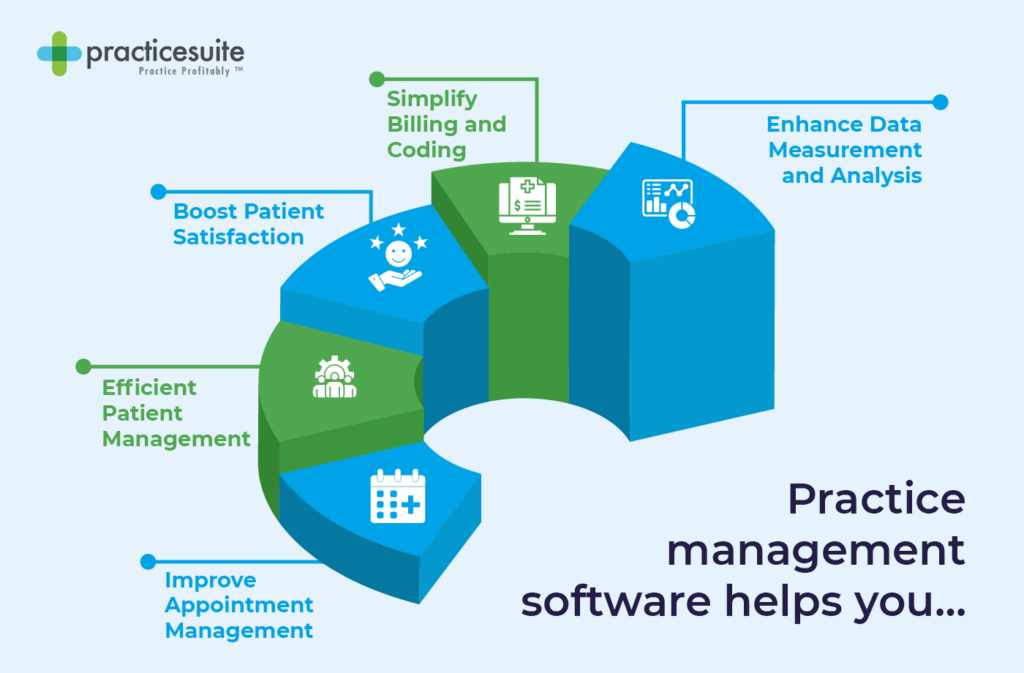
- Improve appointment management. Practice management software digitizes appointment booking, making it easier for practice managers to track when physicians are seeing patients. Additionally, they usually enable online booking, allowing patients to make appointments without needing to call the office and talk to the practice manager.
- Efficient patient management. Robust practice management solutions integrate with electronic health record (EHR) systems, providing the full picture of a patient’s health to physicians. Plus, it allows practice managers to speed up the check-in and check-out processes, automatically verify insurance, and more, resulting in more efficient patient management.
- Boost patient satisfaction. With dedicated patient portals, automated appointment reminders, and secure messaging features, patients can take their healthcare into their own hands, boosting their overall satisfaction. Comprehensive practice management software may also include telehealth capabilities, so your patients can see physicians without leaving their homes.
- Simplify billing and coding. No more chasing down patients and insurance companies to get paid. Practice management software makes payment processing and insurance verification easy. The right solution will also provide actionable steps for insurance appeals and denials, ensuring physicians get paid for their work.
- Enhance data measurement and analysis. As your practice grows, your processes will change. With data measurement and analytics, you can make informed decisions about where to focus your energies and determine what aspects of your practice need adjustments and improvements.
If you’re looking for a practice management solution that will help you reap all of the aforementioned benefits, look no further than PracticeSuite. Our team has over 20 years of experience in the industry, and we’re dedicated to creating solutions that help you manage your entire practice, from administrative tasks to patient engagement. With our tools, you can practice profitably and easily.
Explore our practice management solution’s features, or book a demo to see how it works live!
Additional Resources
It’s only with thorough medical practice management that you can empower your physicians to care for their patients, increase patient satisfaction, and generate more revenue. Now that you know the basics of practice management, you can move forward with hiring a practice manager, optimizing your existing processes, or even exploring software solutions to simplify these tasks!
If you want to learn more about running your medical practice, check out these resources:
- Top 9 Medical Practice Management Software Features. Gain a deeper understanding of the benefits of practice management software and learn more about top features.
- Medical Practice Management Software. Explore PracticeSuite’s medical practice management solution, filled with tools that free up your time to focus more on patient care.
Medical practice management made easy.
Automate and simplify all your responsibilities with PracticeSuite’s complete solution.